Block paving still wins when repairability matters.
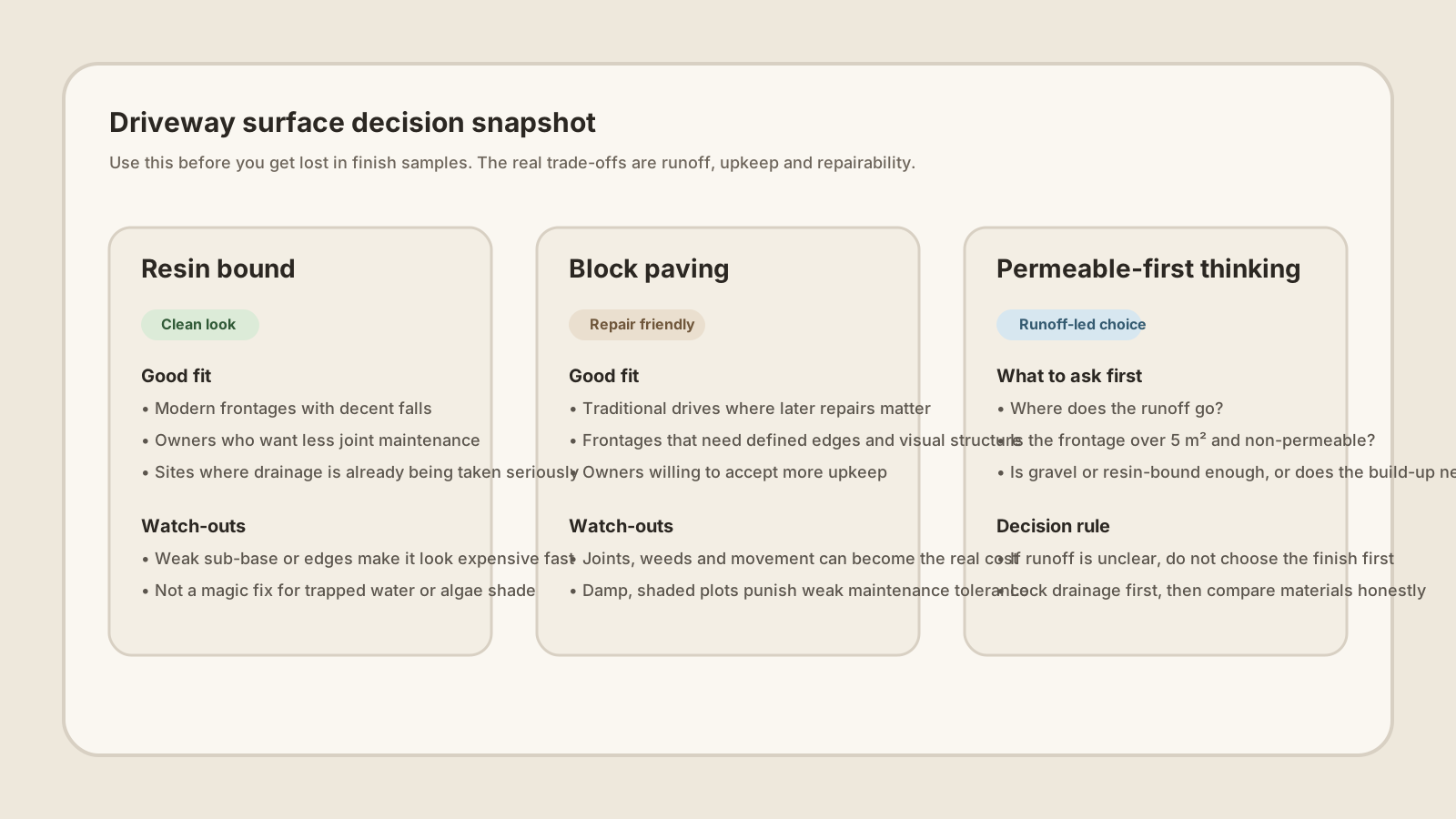
Block paving is not automatically the best-looking or lowest-maintenance option, but it stays relevant because it is easier to patch, lift and alter after utility work, access changes or edge damage.
That is the honest reason to keep it on the shortlist. If the real problem is trapped water, poor falls or a frontage that stays damp all winter, block paving does not make those issues disappear. It simply behaves differently under them.
A good choice for traditional frontages and later changes
If the frontage has clear edges, a more traditional look, and a realistic chance of later repair work, block paving stays attractive. It gives visual structure and is easier to patch than a continuous finish.
Weak joints and damp shade create the real maintenance bill
People often underestimate joint movement, weed growth, silt build-up and damp edge staining. On shaded plots, the maintenance tolerance matters more than the brochure pattern.
Use block paving for the right reason, not by default
You want a surface that can be repaired, lifted or altered more easily later.
You are using it to dodge a drainage or sub-base problem that really needs solving first.
If the site is damp, mossy or badly drained, you are choosing an upkeep relationship as much as a finish.
Best next move: compare it in the homepage matrix, then run the drainage gradient calculator and planning permission checker before treating pattern choice as the main decision.