A rough count helps, but it is not the same as a real marking plan. Bay width, aisle space and end conditions still need checking on the actual hard surface.
Support guide
Car park line marking starts after the bay count, not before it.
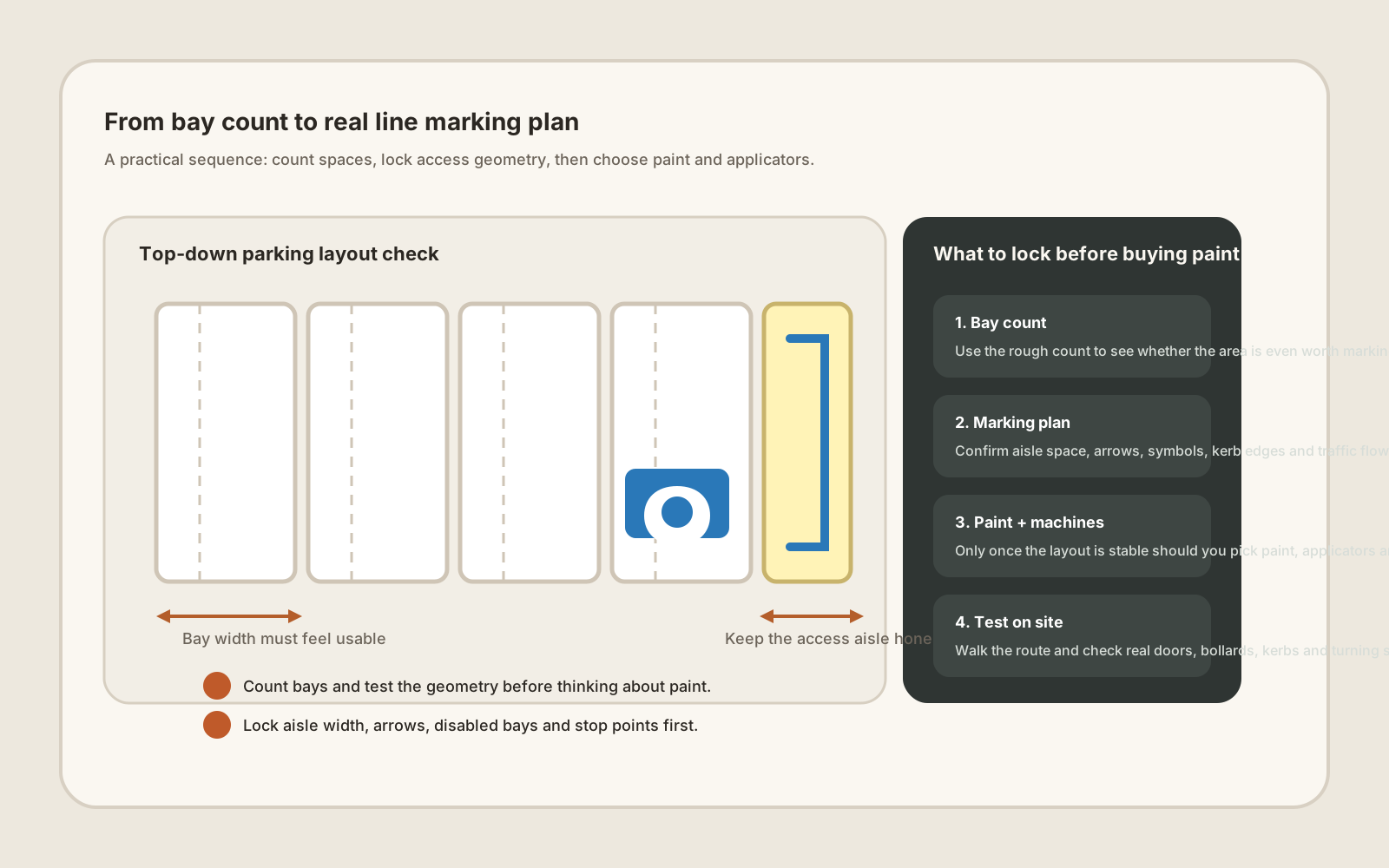
After the rough bay count, the next step is to work out the real layout on site: access lanes, arrows, clearances, symbols and how vehicles will actually move. Once that is settled, you can choose paint, machines and stencils with a lot less guesswork.
Step 1
Use a rough bay count to see whether the layout is even worth taking further.
Step 2
Work out the traffic flow and access lanes before buying anything.
Step 3
Then choose paint, machines and stencils to suit the surface.
What to lock down
Five things that matter before you click on paint or machines
Disabled bays, parent-and-child spaces, arrows and stop lines should be settled before you choose a kit. Otherwise you are choosing products before the layout is properly settled.
Old tarmac, dusty concrete, worn thermoplastic remnants and poor prep can change what paint system makes sense. Surface condition matters as much as coverage.
Useful decision rule
Do not treat a rough layout as a finished marking plan
The bay counter helps answer an early question: how many spaces might fit? If the rough numbers look promising, do not jump straight to buying paint. Check the real layout on site first, then move into paint, machines and stencil choices with fewer surprises.
- Use the parking bay counter to pressure-test the area.
- Walk the edges, kerbs, bollards, gates and pedestrian routes in the real space.
- Settle whether the job needs standard bays, symbols, arrows, hatch zones or extra safety markings.
- Only then use the line marking paint calculator to estimate realistic product demand.
Next buying step
Once the layout is decided, here is what to choose next
At this stage you are moving from rough planning into real product choices: the right paint, the right marking category and the right applicator for the job.
Car park line marking — use this when the job is mainly about parking bays, directional arrows, disabled spaces and car park layout details.
Hard-surface line marking paint — use this when the layout is already decided and you mainly need the right paint for concrete or tarmac.
Line marking machines — use this when you need more consistent lines, faster application or a more professional finish than hand-marking will give you.