Permeable thinking matters before you fall in love with the finish.
On many Warrington frontages, the real question is not “Which finish looks best?” but “Where does the water go after the work is done?” If that answer is weak, the project gets riskier no matter how attractive the surface sample looks.
That is why permeable-first thinking belongs early in the flow. It helps you judge whether gravel, resin-bound or a different build-up gives you an easier planning and runoff story.
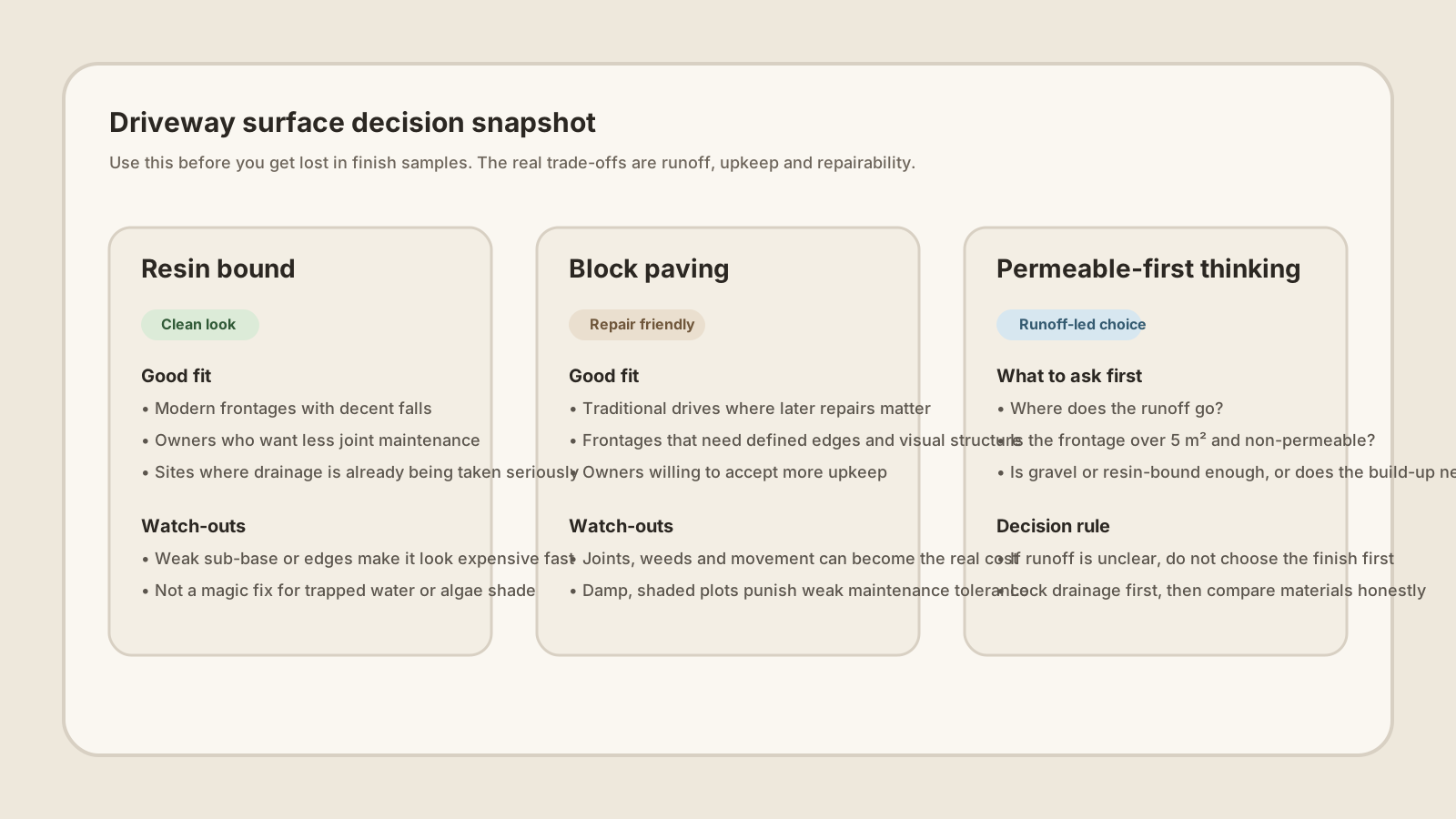
Runoff route changes the whole decision
Once a non-permeable frontage gets large enough, drainage and planning risk become more important than colour, texture or pattern. That is why this page exists: to force the water-path question up front.
Gravel and resin-bound usually tell the cleaner story
Gravel often gives the clearest permeability case. Resin-bound can also work well if the whole build-up supports it. Block paving tends to sit in the middle and needs more careful runoff thinking.
Three checks before you commit to a surface
Use the planning permission checker to see whether the frontage already points to a higher-risk planning path.
Use the drainage gradient calculator to test whether the site has enough fall to support the runoff story.
Only then compare finishes in the homepage matrix and estimator with a more honest sense of what the build-up needs to do.