Resin bound is strongest when the groundwork is already honest.
Resin bound earns its keep when you want a cleaner look, lighter maintenance and a more modern frontage without losing the drainage conversation altogether. It is not cheap enough to forgive bad prep, weak edging or vague runoff planning.
That is why resin feels excellent on the right plot and frustrating on the wrong one. The finish looks premium, but the real decision still sits below it in the sub-base, edges and falls.
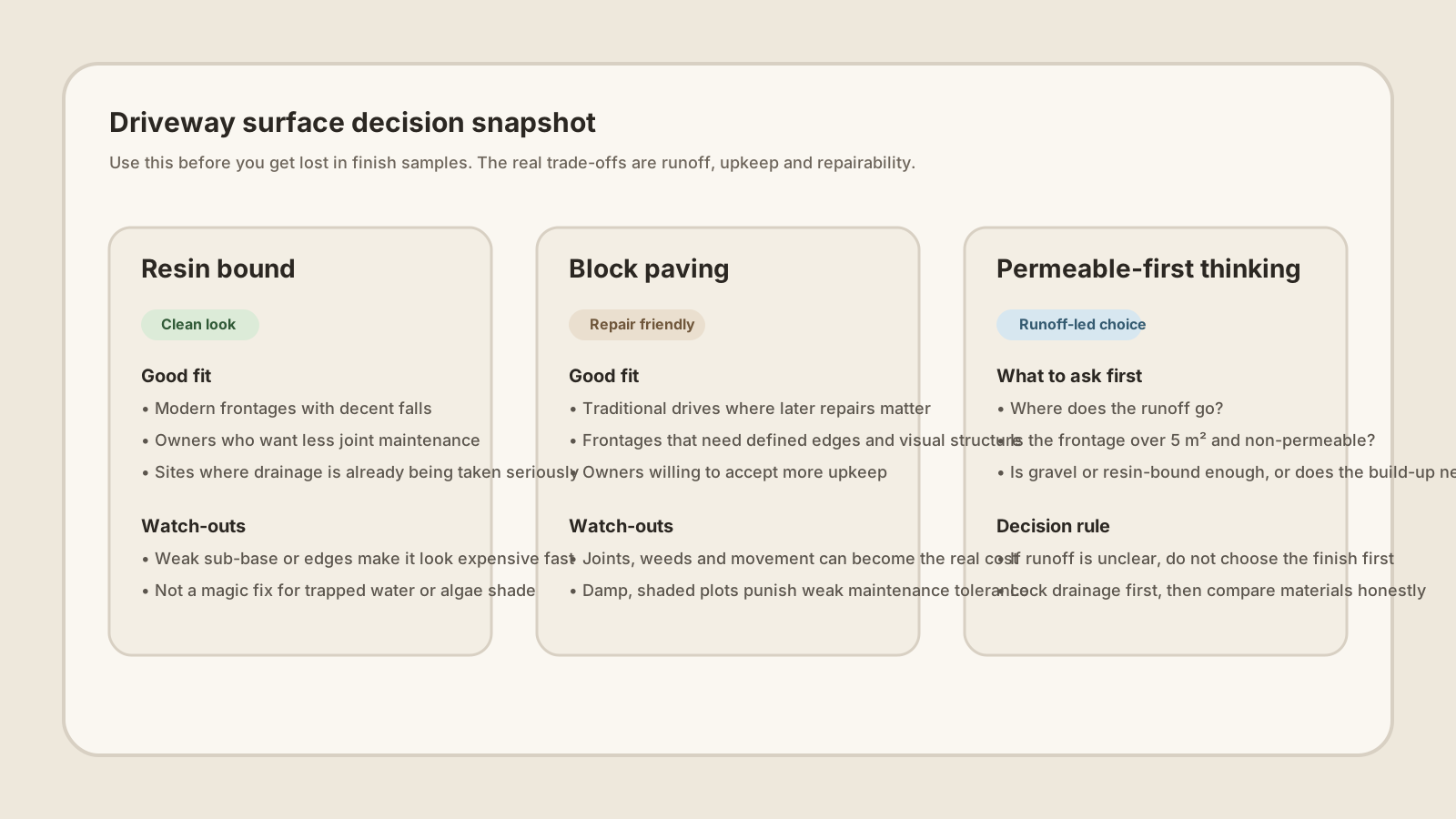
A good option for a cleaner look and less joint maintenance
Resin usually suits homeowners who want a tidy, contemporary surface and are prepared to treat drainage and edge detail seriously from the start.
It exposes hidden weaknesses instead of forgiving them
Poor falls, algae pressure, weak edge restraint or a bad base can make resin feel expensive very quickly. If the site is structurally wrong, the finish simply advertises that fact more clearly.
Use resin when the whole build-up supports it
You want a neater surface with less joint upkeep than block paving.
You hope the surface itself will rescue poor drainage or a weak sub-base.
The better the frontage looks, the more obvious bad edges and trapped runoff become.
Best next move: run the drainage gradient calculator, then the planning permission checker, then compare the price band in the homepage estimator against block paving and concrete with your eyes open.